Back
Back

Automatically translated version. May contain inaccuracies compared to the original.
Trump’s geopolitical genius continues to help the Russian Federation kill Ukrainians
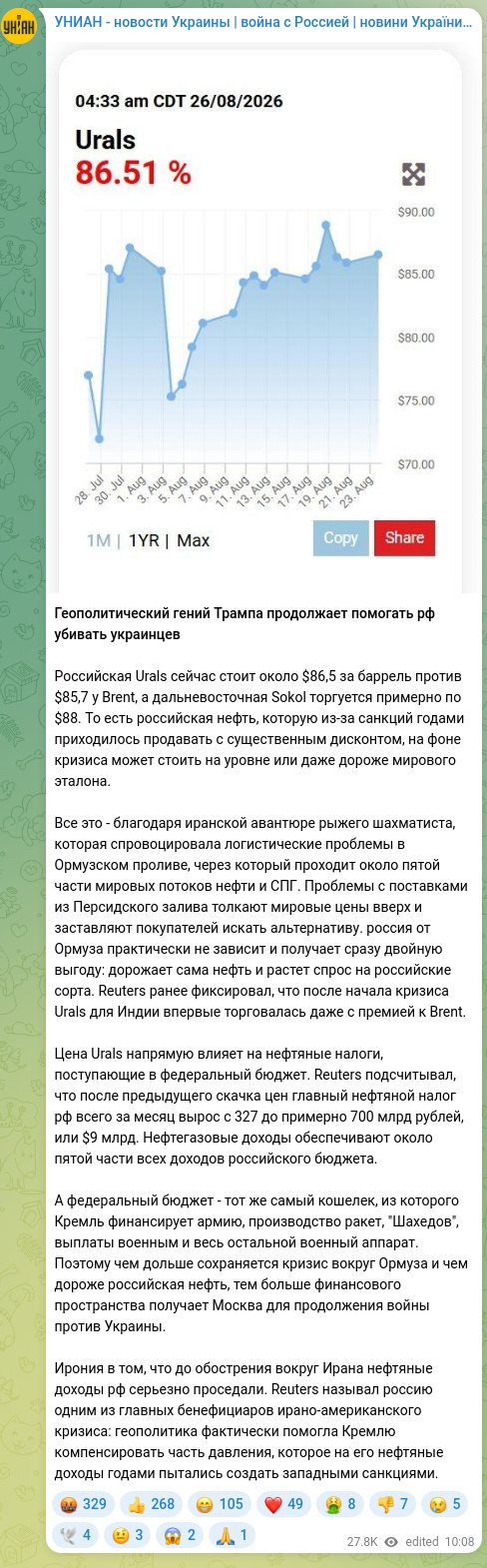
Russian Urals is currently trading at about $86,5 per barrel versus $85,7 for Brent, while the Far Eastern Sokol is trading at roughly $88. In other words, Russian oil, which for years had to be sold at a significant discount because of sanctions, amid the crisis can be priced at or even above the global benchmark.
All of this is thanks to the Iranian gambit of the red-haired chess player, which provoked logistical problems in the Strait of Hormuz, through which about one-fifth of the world’s oil and LNG flows. Supply problems from the Persian Gulf push global prices up and force buyers to look for alternatives. Russia is practically independent of Hormuz and gains a double benefit: the oil itself becomes more expensive and demand for Russian grades rises. Reuters previously recorded that after the start of the crisis Urals traded for India at a premium to Brent for the first time.
The price of Urals directly affects oil taxes going into the federal budget. Reuters calculated that after the previous price spike the main oil tax in the Russian Federation rose in just one month from 327 to about 700 billion rubles, or $9 billion. Oil and gas revenues provide about one-fifth of all revenues of the Russian budget.
And the federal budget is the same wallet from which the Kremlin funds the army, missile production, Shahed drones, payments to the military, and the entire rest of the military apparatus. So the longer the crisis around Hormuz lasts and the more expensive Russian oil becomes, the more financial room Moscow gains to continue the war against Ukraine.
The irony is that before the flare-up around Iran Russian oil revenues were seriously declining. Reuters called Russia one of the main beneficiaries of the Iran–U.S. crisis: geopolitics effectively helped the Kremlin compensate for part of the pressure that Western sanctions had been trying to place on its oil revenues for years.