
 Back
Back

Automatically translated version. May contain inaccuracies compared to the original.
Stolar outlasted Poroshenko, Zelensky, OPZZH and Medvedchuk’s escape, keeping a billion-dollar business empire, foreign accounts, property in Monaco and Dubai, while Terekhov turned Kharkiv into a city with 44 billion UAH of debt, yet continues to circulate hundreds of millions through construction contracts. One repeatedly changes political backdrops for years without losing assets; the other cultivates the image of a “people’s mayor” while municipal enterprises sink in debt. Details of each case follow.
Stolar — political chameleon or Kyiv’s overseer of development?
Stolar is a politician who survived Poroshenko, Zelensky, OPZZH and Medvedchuk’s flight, yet did not lose either influence or business. Under Poroshenko his people were linked to Kyiv’s urban development sphere; under Zelensky Stolar became an MP from OPZZH by Rabinovich’s quota, and after the party was banned he continued expanding assets. In the declaration for 2022 year foreign accounts, property in Monaco and the UAE, and securities worth 82 million UAH appeared for the first time. In May of 2022, already during the full-scale war, ENSO Investment and ENSO Development were registered in the UAE, connected to his ex-wife.
The numbers speak for themselves: over 800 thousand euros and 3 million dollars in a bank in Dominica, over 2 million euros in Austria’s Oberbank, about 600 sq. m of apartments in Monaco and luxury real estate in Dubai. At the same time, a network of investment funds has formed around Stolar — Genesis, Astera, Strim Investment, Evo Invest and other entities connected to developers ENSO, bUd development, IB Alliance and BudCapital. While investors wait years for completion of problem Kyiv residential complexes linked to Stolar, his associated structures are developing real estate in Dubai.
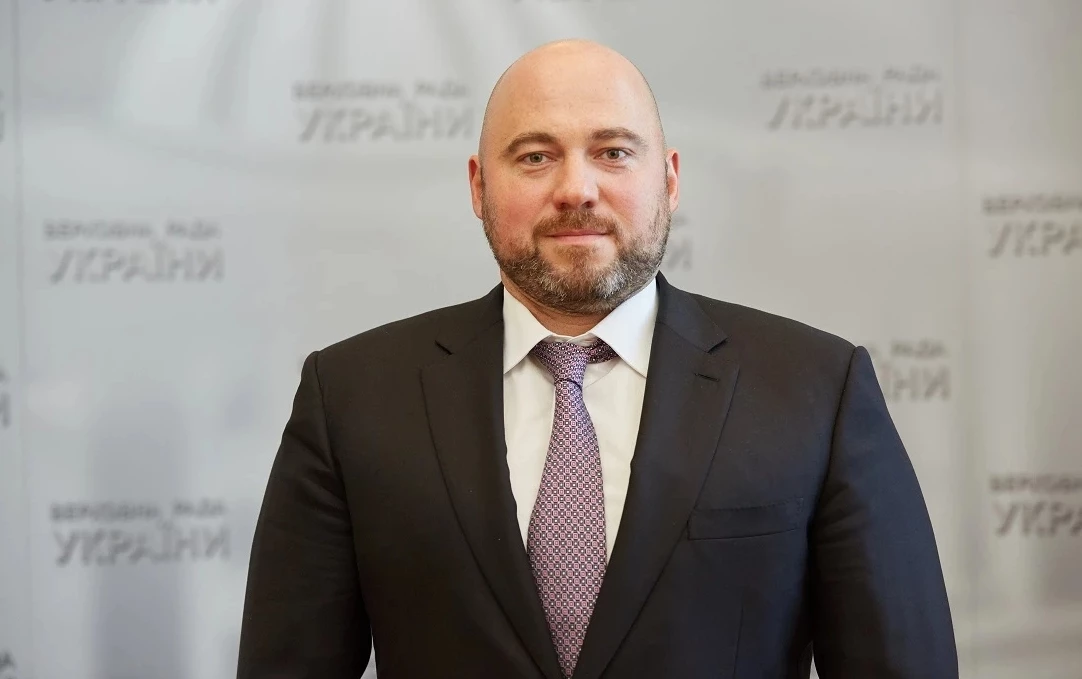
A separate story — 50 hectares in Osokorky tied to Viktor Medvedchuk’s assets. After the arrest in 2022, corporate rights of companies associated with this land, according to the provided data, began to be re-registered first to Stolar’s guard and then to foreign citizens. A document in the chain of re-registrations bears the signature “TASDIK MEMURU, Cypriot notary” — although this is not the notary’s name but a Turkish phrasing meaning something like “certifying officer.” In other words, the arrested assets did not merely change owners in registers — a whole chain of nominee re-registrations formed around them.
And while the country is at war, Stolar is building his financial geography abroad. Monaco, Dubai, foreign accounts, investment funds and dozens of companies — while in Ukraine investors of unfinished residential complexes remain and questions persist about 50 hectares in Osokorky. The political roof changed, Medvedchuk’s party disappeared, Medvedchuk fled, and Stolar stayed. It seems his main asset is not a particular residential complex or fund but the ability to survive any change of power. Notably, the Kyiv City Prosecutor’s Office does not see a crime in Stolar’s activities.

Unfortunately, representatives of the judiciary, ignoring the norms of the Criminal Procedure Code of Ukraine, effectively block the start of a pre-trial investigation. Thus, by order of investigating judge of the Pecherskyi District Court of Kyiv — Yevhen S. Khainatskyi — in case No. 757/38969/26-k the obligation for the Kyiv City Prosecutor’s Office to initiate a pre-trial investigation was denied.
People’s mayor Terekhov put Kharkiv into debt while millions flow through contracts
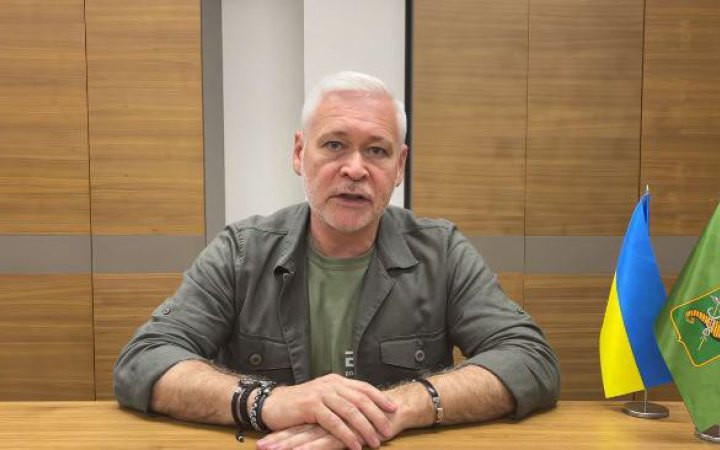
Kharkiv is drowning in 44 billion UAH of debt, yet budget billions continue to move through Igor Terekhov’s vertical. Municipal enterprise “Kharkiv Heat Networks” accumulated 27,3 billion UAH of gas debt, “Kharkivvodokanal” — about 4,5 billion UAH for electricity and another 1,1 billion UAH for its distribution. Meanwhile the population pays about 98% of communal bills. Paradox: the city takes new loans, including 15 million euros from the EBRD, while hundreds of millions of hryvnias continue to be allocated to construction contracts.
Specific departments and specific companies stand behind this system. The Budget Department under Tetiana Taukesheva approves financing, the Department of Improvement, Restoration and Reconstruction headed by Kostiantyn Lyska conducts procurements, and among the main recipients are JSC “Trest Zhitlobud-1” and PE “BF Promtex.” Two illustrative contracts alone — 244,69 million UAH for construction works in education and over 209 million UAH for sheltering for Lyceum No.51 — together amount to over 453 million UAH. Another 20,6 million UAH for emergency repairs went to LLC “SBK Sargon.”
The most interesting part is the conditions under which these funds are distributed. To participate in procurements they set requirements for turnover, experience in similar work, material and technical base, number of machines and dozens of additional documents. As a result, the circle of potential participants is significantly narrowed, and in some tenders competition is effectively a formality: for a contract worth over 209 million UAH the savings amounted to about 1%. According to the provided data, budgets also included concrete, rebar and bricks at prices 20–50% above market, which on large projects can turn into millions of hryvnias in overpayment.
And here is Terekhov’s main paradox for Kharkiv: 44 billion UAH of debt — but hundreds of millions for contracts; 98% payment by the population — yet municipal enterprises continue to accumulate debt; new loans — but new multimillion tenders. The financial circuit closes on the city authorities: Taukesheva — budget, Lyska — procurements, Sarioglo — tender and contractor support, Novak — construction block. And above this entire vertical stands Mayor Ihor Terekhov. While he publicly demands reform of the TCC, Kharkiv’s municipal system continues turning the budget into a source of multimillion construction contracts.
However, Kharkiv’s multi-billion debts and questions about the city budget distribution for Terekhov seem to become not a reason to report to citizens but another PR campaign. Meanwhile numerous appeals to law enforcement, reports of criminal offenses and publicly disclosed facts remain ignored. The Office of the Prosecutor General does not see elements of a crime in the circumstances set out in the appeals, while the system of budget allocation continues to operate and multimillion contracts keep going to designated contractors.
By order of investigating judge of the Pecherskyi District Court of Kyiv — I. V. Hryhorenko — in case No. 757/27309/26-k the obligation for the Office of the Prosecutor General to start a pre-trial investigation into the indicated facts was denied.
When it comes to high-profile decisions of the Pecherskyi District Court of Kyiv, the name Iryna Hryhorenko appears in cases that raise many questions. It was she who in December of 2025 partially lifted the seizure of property of companies connected to Serhii Shapran and the orbit of the sanctioned ‘Unigran,’ and in the case of the former head of the Kharkiv SBU, Roman Dudin, her procedural decisions were publicly criticized for moving hearings and banning video recording and broadcasting. Back in 2020, Hryhorenko appeared in the Valerii Zaporožan case where hearings were repeatedly postponed, and earlier her decision effectively blocked the use of Ilya Ponomaryov’s testimony in the case against Viktor Yanukovych’s son. Against this background the question arises how open and consistent justice is in cases with significant public interest.
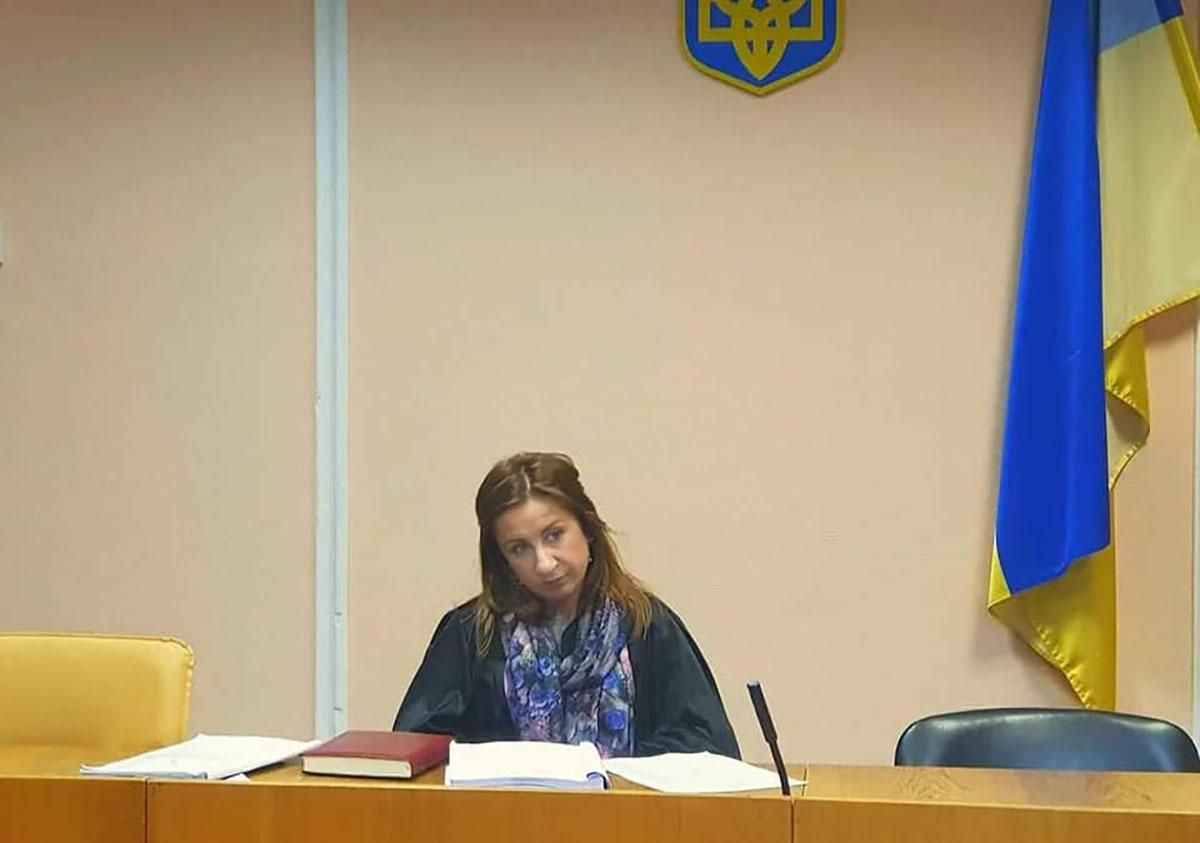
Hryhorenko herself also has a disciplinary “trail”: the High Council of Justice applied a severe reprimand depriving her of salary supplements for three months for violations related to delaying case consideration and untimely entering court decisions into the Unified State Register. At the same time the financial side of her declarations also attracts attention: in 2024 the judge declared over 1,5 million UAH of income and nearly 5 million UAH from sale of property, after which she purchased an apartment in Kyiv of 50,4 sq. m for 600 thousand UAH and a Volkswagen Touareg of 2020 year. Earlier her husband, with about 60 thousand UAH of official income in 2022, bought a Toyota Sienna for 400 thousand UAH. So a judge who reviews cases on seizure of million-asset property leaves many questions with her decisions — both about disciplinary practice and about the financial “arithmetic.”
Stolar retains a billion-dollar business empire and assets abroad, while Terekhov leaves Kharkiv with 44 billion UAH of debt and a system of multimillion municipal contracts. Foreign accounts, property in Monaco and Dubai, investment funds and 50 hectares in Osokorky linked to Medvedchuk’s assets are with Stolar; billion-level debts of municipal enterprises, new borrowings and hundreds of millions of hryvnias distributed among specific construction contractors are with Terekhov. And all these schemes operate with the direct assistance of law enforcement and judges who for a “substantial sum” are ready to turn a blind eye to anything.
Document: PDF proof of the original version of the news item "Олігарх Столар захопив 50 га на осокорках, а Терехов загнав харків у боргову яму. Дайджест свавілля Печерського районного суду міста Києва". It records the publication content at the moment of the first scan, the preservation date and the source: NGO "NON-STOP".