Back
Back
Automatically translated version. May contain inaccuracies compared to the original.
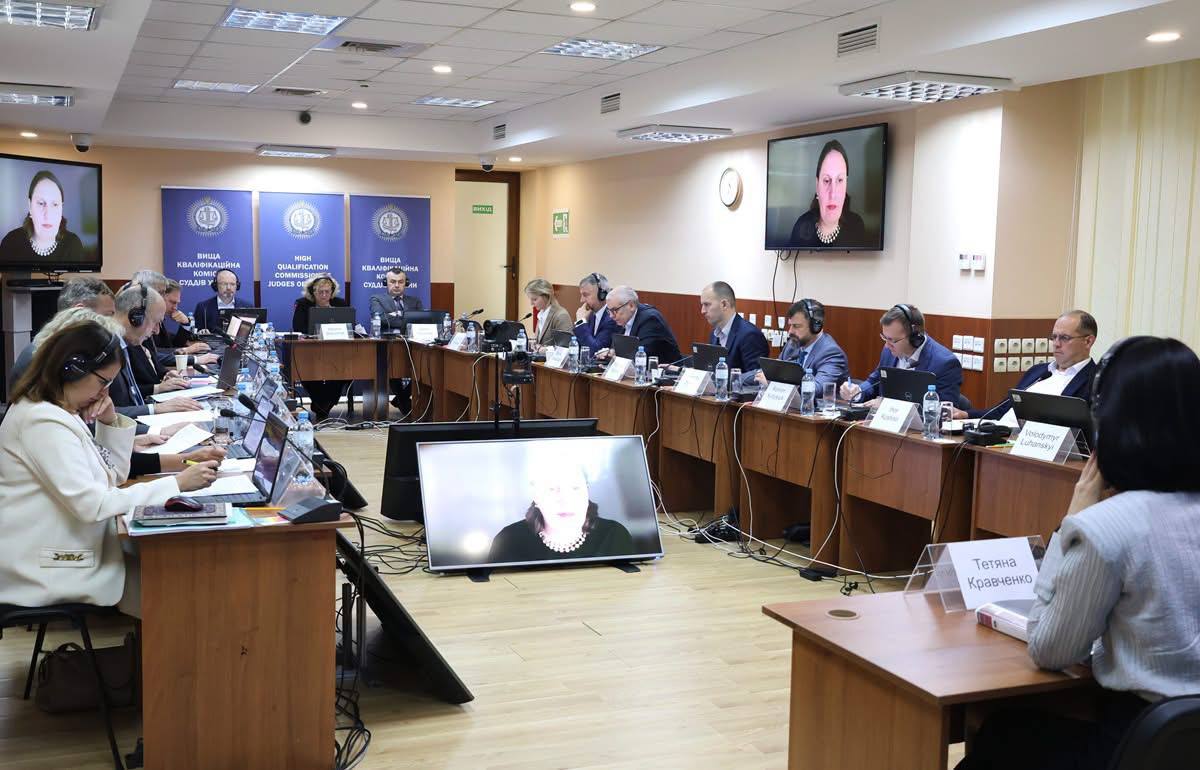
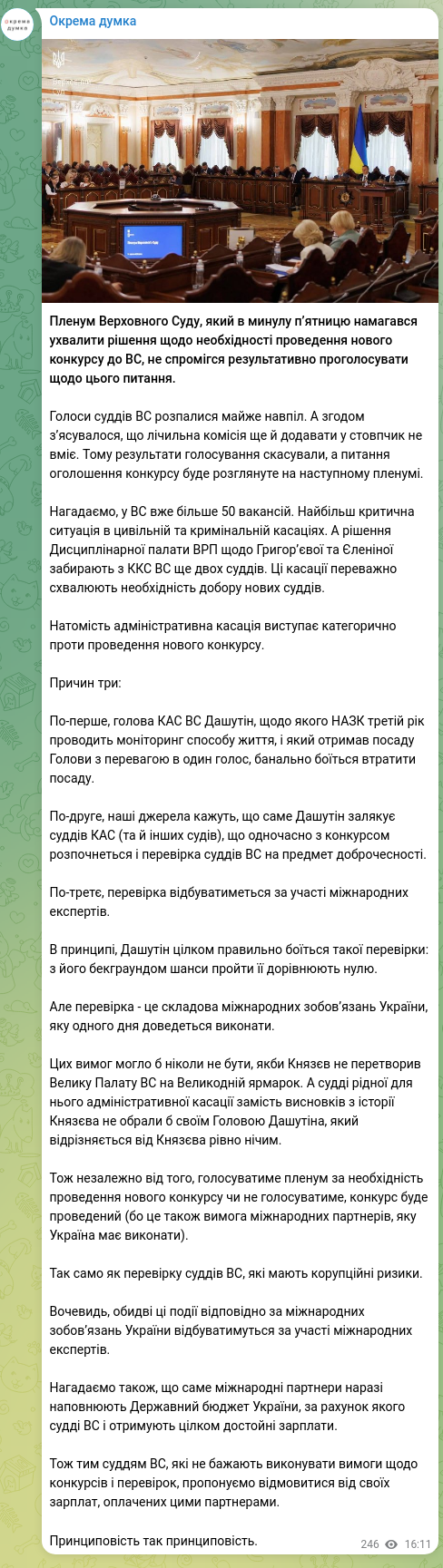
The Plenum of the Supreme Court, which last Friday attempted to decide on the necessity of holding a new competition for the SC, failed to reach a decisive vote on that issue.
The votes of the Supreme Court judges split almost in half. Later it turned out that the counting commission also does not know how to add up in a column. Therefore the voting results were annulled, and the issue of announcing the competition will be considered at the next plenum.
Recall that the SC already has more than 50 vacancies. The most critical situation is in the civil and criminal cassation chambers. And the Disciplinary Chamber of the High Council of Justice’s decisions regarding Hryhorieva and Yelenina are removing two more judges from the SC Criminal Chamber. These cassation chambers are mostly in favor of recruiting new judges.
By contrast, the administrative cassation is categorically opposed to holding a new competition.
There are three reasons:
First, the head of the Administrative Cassation Chamber of the SC, Dashutin, whom the National Agency on Corruption Prevention has been monitoring for the third year regarding his lifestyle, and who won the Chair by a margin of one vote, is simply afraid of losing his position.
Second, our sources say that it is Dashutin who is intimidating judges of the Administrative Cassation (and of other courts), warning that a vetting of Supreme Court judges for integrity will begin at the same time as the competition.
Third, the vetting will take place with the participation of international experts.
In principle, Dashutin is quite rightly afraid of such a vetting: with his background, the chances of passing it are equal to zero.
But the vetting is part of Ukraine’s international obligations, which will have to be fulfilled one day.
These requirements might never have arisen if Knyazev had not turned the Grand Chamber of the SC into an Easter fair. And if the judges of the administrative cassation, his own chamber, had not chosen as their Chair Dashutin—instead of drawing conclusions from Knyazev’s history—who differs from Knyazev in exactly nothing.
So regardless of whether the plenum votes for the need to hold a new competition or not, the competition will be held (because it is also a demand of international partners that Ukraine must comply with).
The same applies to the vetting of Supreme Court judges who have corruption risks.
Evidently, both of these events, in accordance with Ukraine’s international obligations, will take place with the participation of international experts.
Let us also recall that it is precisely international partners who are currently filling the State Budget of Ukraine, from which Supreme Court judges receive quite decent salaries.
So to those Supreme Court judges who do not wish to comply with the requirements regarding competitions and vetting, we suggest they refuse their salaries paid by these partners.
If they want to be principled, let them be principled.






 Telegram publication