 Back
Back
Automatically translated version. May contain inaccuracies compared to the original.
💛 We don't need evidence. We trust him.
“According to our sources in political circles…”
“Our interlocutors in business circles report…”
Familiar phrases.
We don't know these people. We haven't heard their conversations. We can't always verify how they know what they're telling. But we know the journalist. And we trust him.
But where is the line between the claims “I trust his work” and “if he said it — it's true”?
Do we trust the investigation because we saw the evidence, or do we treat as evidence what was told to us by someone we trust?
📁 In the piece coming out tomorrow, we tried to examine exactly this.
How a name becomes the answer to the question about evidence. Why a source can tell the truth — and at the same time pursue their own agenda. And when questions about a publication start to be perceived as an attack on the author.
We do not devalue journalistic work. But respect for it does not negate the right to ask: what has been verified, what is known only from the source's words, and what is the journalist's own conclusion?
Tomorrow — a conversation not only about the one who reports. But also about us, who believe.
⚙️ At what point does a person become for us the measure of truth? And are we then able to notice when they were wrong?
💬 ABleaks_bot
💕 Join
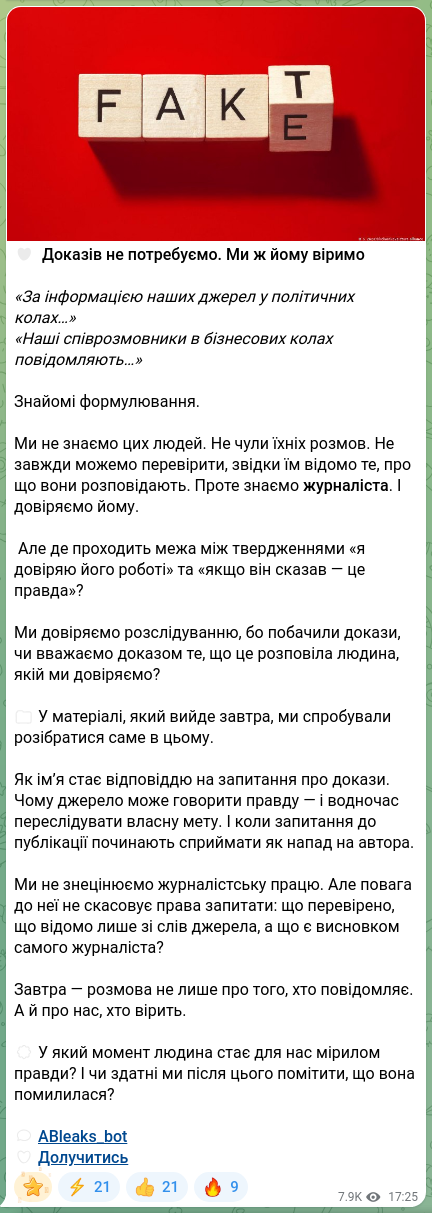




 Telegram publication