
 Back
Back

Automatically translated version. May contain inaccuracies compared to the original.
Ivan Fedorov, despite connections to the Russian Federation, overt support for Russians at demonstrations in 2014 and the “surrender” of Melitopol — now occupied by Russia — after captivity, astonishingly quickly received the chair of the Zaporizhzhia Regional Military Administration. And while Zaporizhzhia endures daily shelling and hundreds of millions of hryvnias for shelters flow into the pockets of “preferred” companies, an equally brazen plunder is unfolding in the capital — a multibillion takeover of the Respublika mall by people in the orbit of Astion, Firtash, and Khomutynnik. Detailed accounts of each case follow.
Ivan Fedorov: a public-relations hero or the manager of hundreds of millions in budget contracts?
Zaporizhzhia is hit daily by Russian drones and missiles, while hundreds of millions of hryvnias allocated for building shelters are concentrated in the hands of a limited circle of companies. Through the state enterprise “Local Roads of Zaporizhzhia Region,” headed by an official close to Ivan Fedorov, tenders totaling over 800 million hryvnias were announced in 2026. The biggest winners were LLC INTERPROFSERVICE and LLC Construction Company Kalmius, which received contracts totaling more than 700 million hryvnias. Such concentration of budget funds among a single group of contractors raises the most questions.

The absolute favorite of the procurements was LLC INTERPROFSERVICE, which received four contracts worth more than 576 million hryvnias for building shelters for Zaporizhzhia’s schools and kindergartens. Yet by the end of 2025 the company had virtually no experience carrying out construction works of that scale. The company’s staff lists only five employees, and it has no own construction equipment — it brings in equipment under contracts with other firms. Despite this, the company was entrusted with implementing facilities on which children’s safety during air raid alerts depends.
There are no fewer questions about the tenders themselves. Some procurements set requirements for significant bid security, ISO certification, market price analysis, and other criteria that substantially narrowed the pool of potential participants. In some procedures the budget saved only about 10 thousand hryvnias, and competition was effectively nominal. INTERPROFSERVICE’s experience performing similar works was confirmed through LLC ESCO Zaporizhzhia, which the Antimonopoly Committee of Ukraine previously found to have participated in anti-competitive coordinated actions.
Ivan Fedorov continues to cultivate an image of an effective leader, while at the same time hundreds of millions of hryvnias of budget funds concentrate around his team. Interestingly, the State Bureau of Economic Security seems not to notice the scheme in which hundreds of millions on Fedorov’s instruction go nowhere.
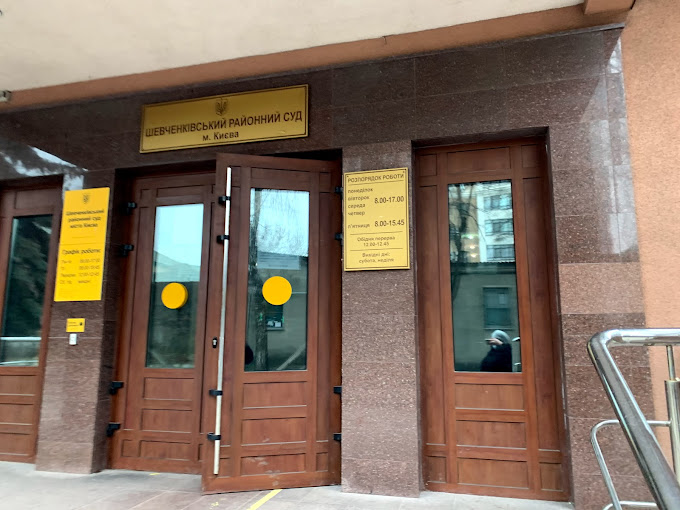
Unfortunately, representatives of the judiciary, ignoring the Criminal Procedure Code of Ukraine, are effectively blocking the start of a pre-trial investigation. Thus, by the ruling of investigative judge Inna Mikheeva of the Shevchenkivskyi District Court of the city of Kyiv in case No. 761/28544/26, the petition to obligate the State Bureau of Economic Security of Ukraine to begin a pre-trial investigation was denied.
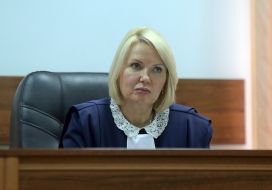
Inna Mikheeva is a judge of the Shevchenkivskyi District Court of Kyiv who regularly finds herself at the center of the most high-profile criminal proceedings. She sat on the panel that chose a preventive measure for Ihor Kolomoyskyi, considered the case regarding declaration issues of Kyiv National University rector Volodymyr Buhrov, and also heard proceedings concerning Roman Chervinsky. In Chervinsky’s case the defense sought the judge’s recusal, citing doubts about her impartiality, but the court denied the motion. Public debate continues about possible ties between Mikheeva and the circle around Andrii Portnov, which is why each of her decisions in politically sensitive cases attracts particular attention.
The judge’s family’s property situation also raises questions. Despite relatively modest official incomes, a significant portion of valuable assets is registered to her husband. This model of property ownership has long been characteristic of many Ukrainian officials: formally it does not break the law, but it often becomes the subject of public scrutiny and discussion about the transparency of the origin of assets. At the same time, another telling fact is that Mikheeva herself previously appealed to the High Council of Justice with complaints about interference in the administration of justice, while today questions about independence and impartiality are increasingly being directed at her.
From a loan of 2,6 billion to the seizure of a mall: how Respublika ended up in Astion’s people’s hands
In 2012 the Nadra Bank financed the construction of the Respublika mall by issuing loans of 2,59 billion hryvnias secured by the land and property rights to the future complex. A few years later the bank became insolvent, and hundreds of millions of hryvnias dissolved into a network of related companies. Instead of returning funds to the state, one of the country’s most valuable commercial assets began changing owners. At the center of this story are Vasyl Astion, Vitaliy Khomutynnik, and pro-Russian oligarch Dmytro Firtash.

A key moment was the sale of the claim rights for loans totaling 2,59 billion hryvnias through a “Dutch” auction. The asset was sold for only 777 million hryvnias to a company that had appeared shortly before the bidding and lacked the resources for such a purchase. Later the Antimonopoly Committee found the auction to be collusive among participants, and the Supreme Court confirmed this conclusion. As a result the state lost billions, and control over the mall passed to completely different people.
The next owner of the property complex valued at more than 2,1 billion hryvnias became JSC DILIGENCE. The company’s financial statements did not explain with what funds such an expensive asset had been acquired. Management of the mall and rental income were divided among different legal entities, which made it possible to control financial flows and siphon off tens and hundreds of millions of hryvnias through internal transactions.
The Respublika mall is only one example of this model at work. By the same scenario, Astion’s group established control over the Khorol baby food plant: first registry entries were changed, and then new ownership was cemented through court decisions. For years this mechanism allowed problematic loans and state assets to be turned into private multibillion ownership.
By the ruling of investigative judge Andrii Trubnikov of the Shevchenkivskyi District Court of the city of Kyiv in case No. 761/28251/26, the petition to obligate the Shevchenkivska District Prosecutor’s Office of the city of Kyiv to begin a pre-trial investigation into the indicated facts was denied.

Judge Andriy Trubnikov of the Shevchenkivskyi District Court of Kyiv was listed among judges whose rulings during the Revolution of Dignity became symbols of the persecution of Maidan participants. He placed activist Volodymyr Kadura in custody for 60 days and also deprived drivers of their licenses for participating in motor convoys to Mezhyhirya — peaceful protests against Viktor Yanukovych’s regime. After the change of power, one of these decisions was overturned and the protester was absolved of responsibility under a special law preventing persecution of Maidan participants. This did not prevent the judge from remaining in the judiciary.
More than ten years have passed, yet Andriy Trubnikov continues to administer justice. Despite the conclusion of the Public Integrity Council about his failure to meet integrity criteria and materials from the Temporary Special Commission regarding his rulings from the Maidan period, he was not dismissed. The High Council of Justice did not apply the harshest disciplinary sanction to the judge, and the panel of the High Qualification Commission of Judges found him fit for the position. It turns out that decisions for which other judges were labeled “Maidan judges” did not become an obstacle to Trubnikov’s further career.
And while law enforcement bodies have for years investigated the circumstances of Nadra Bank’s bankruptcy and the multibillion operations involving its assets, the persons who gained control over the Respublika mall continue to freely manage one of the country’s most valuable commercial properties. Despite the Antimonopoly Committee’s finding of anti-competitive collusion during the auction, later confirmed by the Supreme Court, and numerous questions about the origin of the funds used to purchase the property complex, no legal consequences have followed for the ultimate beneficiaries from the Shevchenkivska District Prosecutor’s Office of the city of Kyiv.
Ivan Fedorov allocates hundreds of millions of hryvnias for building shelters, while people connected to Vasyl Astion, Vitaliy Khomutynnik, and Dmytro Firtash control one of the country’s most expensive shopping and entertainment centers. In one case, budget funds intended for children’s safety during war are put at risk; in the other, state assets were lost after Nadra Bank’s bankruptcy. What unites these stories is the complete indifference of law enforcement agencies, which for bribes have been covering these schemes for years.
Document: PDF proof of the original version of the news item "Губернатор Федоров пиляє бюджет на безпеці дітей, а група олігархів захопила ТРЦ “Республіка”. Дайджест свавілля Шевченківського районного суду міста...". It records the publication content at the moment of the first scan, the preservation date and the source: NGO "NON-STOP".



