Back
Original version

The bail system is undergoing a dangerous transformation. Under the Criminal Procedure Code, bail is an independent pre...

Automatically translated version. May contain inaccuracies compared to the original.

The bail system is undergoing a dangerous transformation.

Under the Criminal Procedure Code, bail is an independent preventive measure or an alternative to detention. Its purpose is to ensure a person’s proper procedural behavior, not to create a financially insurmountable condition for release from custody.

In July 2026 the Constitutional Court specifically emphasized: the amount of bail must be determined taking into account the person’s real financial situation, cannot be manifestly excessive, and must leave the suspect a real possibility to use bail as an alternative to deprivation of liberty.

In practice, everything is exactly the opposite.

In the same “Muza” case — Ivakhnenko in the “Carthage” case — bail was set at 20 million UAH. That is roughly six times her lawful annual income. She does not have the funds to post bail — accordingly, she remains in pretrial detention.

But, as it turns out, today we have even reached a situation where having funds accumulated in a bank does not guarantee the ability to post bail.

In the “Midas” case, Kryvonos publicly reported that financial monitoring blocked funds intended for posting bail.

In the “Femida” case, the High Anti-Corruption Court set bail for Stolar at 300 million UAH as an independent preventive measure — without detention. An accomplice in the “Carthage” case is in custody, while the organizer in “Femida” is out on bail and wasn’t even detained beforehand. Virtuous, you might say.

By the way, Stolar currently claims that he has the necessary funds and is ready to comply with the court ruling, but banks refuse to carry out the relevant payments.

Thus, between the court order setting bail and its actual payment, another barrier appears — the bank’s financial monitoring, which can block a payment due to so-called reputational risks. But whose risks are being considered in that case — Pyshny’s or the bank manager’s? And what reputational risks could possibly outweigh a person’s freedom? None of this has anything to do with the law.

Of course, bail and the companies posting it should be checked. But that should not be turned into acts of public shaming.

There is another problem — the guarantor companies.

Recently, certain deputies and so-called anti-corruption activists have been publishing the names of guarantor companies, investigating their owners, related persons, turnovers, and effectively creating a reputationally toxic environment around them.

As a result, even a company that has legal funds, confirmed their lawful origin, and is fully willing to act as a guarantor is forced to take into account the risk of information attacks and the appearance of its name in another post by Zheleznyak or other members of the “reformers” tribe.

This creates an obvious deterrent effect for potential guarantors.

Under such conditions, bail ceases to serve as a real alternative to detention, and the person effectively finds themselves in a state of inescapable isolation.

Prolonged pretrial detention under this arrangement objectively creates significant procedural pressure and forces people to give any testimony favorable to the investigation, cooperate, or enter into a plea deal as the only real way to change their situation.

If bail exists only formally and the person is effectively deprived of the possibility to be released from custody, then it should not be called an “alternative preventive measure.”

Call things by their names — captivity.

All of this should be viewed through the lens of a serious violation of human rights and the guarantees enshrined in the Convention for the Protection of Human Rights and Fundamental Freedoms.

Among the main public drivers of the deconstruction of the bail institution have been Shabunin, Kalenyuk, Zheleznyak, Nikolov, Radina, Tkach and others — it is their rhetoric and public pressure that have largely contributed to forming a practice whereby a legally provided preventive measure increasingly loses its real purpose.

It would be interesting to see them if they themselves found themselves in the position of people subject to such preventive measures.

Then we would surely hear a chorus of howls about democracy, human rights, the presumption of innocence, and the rule of law.
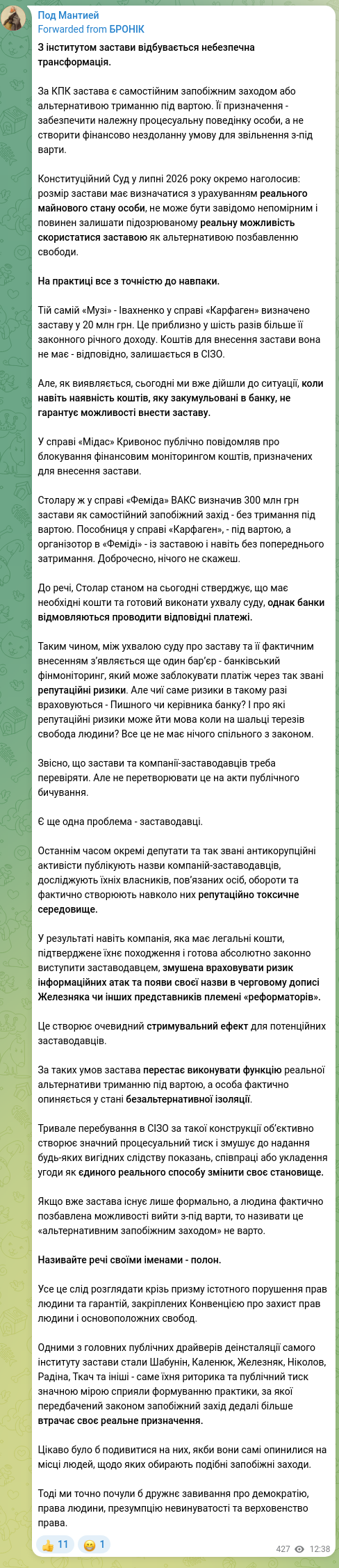
Screenshot of a Telegram post: The bail system is undergoing a dangerous transformation. Under the Criminal Pr…

З інститутом застави відбувається небезпечна трансформація.

За КПК застава є самостійним запобіжним заходом або альтернативою триманню під вартою. Її призначення - забезпечити належну процесуальну поведінку особи, а не створити фінансово нездоланну умову для звільнення з-під варти.

Конституційний Суд у липні 2026 року окремо наголосив: розмір застави має визначатися з урахуванням реального майнового стану особи, не може бути завідомо непомірним і повинен залишати підозрюваному реальну можливість скористатися заставою як альтернативою позбавленню свободи.

На практиці все з точністю до навпаки.

Тій самій «Музі» - Івахненко у справі «Карфаген» визначено заставу у 20 млн грн. Це приблизно у шість разів більше її законного річного доходу. Коштів для внесення застави вона не має - відповідно, залишається в СІЗО.

Але, як виявляється, сьогодні ми вже дійшли до ситуації, коли навіть наявність коштів, яку закумульовані в банку, не гарантує можливості внести заставу.

У справі «Мідас» Кривонос публічно повідомляв про блокування фінансовим моніторингом коштів, призначених для внесення застави.

Столару ж у справі «Феміда» ВАКС визначив 300 млн грн застави як самостійний запобіжний захід - без тримання під вартою. Пособниця у справі «Карфаген», - під вартою, а організотор в «Феміді» - із заставою і навіть без попереднього затримання. Доброчесно, нічого не скажеш.

До речі, Столар станом на сьогодні стверджує, що має необхідні кошти та готовий виконати ухвалу суду, однак банки відмовляються проводити відповідні платежі.

Таким чином, між ухвалою суду про заставу та її фактичним внесенням з’являється ще один бар’єр - банківський фінмоніторинг, який може заблокувати платіж через так звані репутаційні ризики. Але чиї саме ризики в такому разі враховуються - Пишного чи керівника банку? І про які репутаційні ризики може йти мова коли на шальці терезів свобода людини? Все це не має нічого спільного з законом.

Звісно, що застави та компанії-заставодавців треба перевіряти. Але не перетворювати це на акти публічного бичування.

Є ще одна проблема - заставодавці.

Останнім часом окремі депутати та так звані антикорупційні активісти публікують назви компаній-заставодавців, досліджують їхніх власників, пов’язаних осіб, обороти та фактично створюють навколо них репутаційно токсичне середовище.

У результаті навіть компанія, яка має легальні кошти, підтверджене їхнє походження і готова абсолютно законно виступити заставодавцем, змушена враховувати ризик інформаційних атак та появи своєї назви в черговому дописі Железняка чи інших представників племені «реформаторів».

Це створює очевидний стримувальний ефект для потенційних заставодавців.

За таких умов застава перестає виконувати функцію реальної альтернативи триманню під вартою, а особа фактично опиняється у стані безальтернативної ізоляції.

Тривале перебування в СІЗО за такої конструкції об’єктивно створює значний процесуальний тиск і змушує до надання будь-яких вигідних слідству показань, співпраці або укладення угоди як єдиного реального способу змінити своє становище.

Якщо вже застава існує лише формально, а людина фактично позбавлена можливості вийти з-під варти, то називати це «альтернативним запобіжним заходом» не варто.

Називайте речі своїми іменами - полон.

Усе це слід розглядати крізь призму істотного порушення прав людини та гарантій, закріплених Конвенцією про захист прав людини і основоположних свобод.

Одними з головних публічних драйверів деінсталяції самого інституту застави стали Шабунін, Каленюк, Железняк, Ніколов, Радіна, Ткач та ініші - саме їхня риторика та публічний тиск значною мірою сприяли формуванню практики, за якої передбачений законом запобіжний захід дедалі більше втрачає своє реальне призначення.

Цікаво було б подивитися на них, якби вони самі опинилися на місці людей, щодо яких обирають подібні запобіжні заходи.

Тоді ми точно почули б дружнє завивання про демократію, права людини, презумпцію невинуватості та верховенство права.

Screenshot of a Telegram post: З інститутом застави відбувається небезпечна трансформація. За КПК застава є са…
Download Download proof

Other channel publications

Scanned Telegram publication

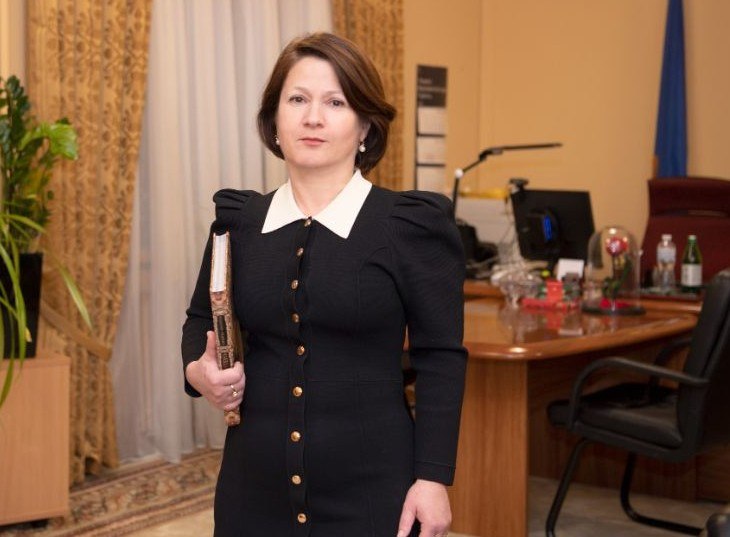
🔥We found on the internet photos of the figure in the “Mudra recordings” and potential suspect Larysa Rohach wearing headscarves. 🙈Really, what kind of times are these when judges are already “settling matters” over a headscarf?! 😁And we’re still waiting for the Supreme Court Plenum session with an extraprocedural assessment of this shameful state of affairs in commercial justice and in the Commercial Cassation Court of the Supreme Court! It’s strange that judicial activist Lena Kibenko hasn’...

Scanned Telegram publication

Dmytro Kryvenko: “On the Essence of Corruption, ‘Red Lines,’ and the Apex of Double Standards” As a trial judge, I am obliged to ensure that justice is not only administered but that it is visible that it is being administered. When you live in a small community, you are so transparent that even crystal vases might envy you. If you show someone any unusual favor, tomorrow everyone will be talking about it. That is precisely why the rules are the same for everyone. And nothing can make me deviate...

Scanned Telegram publication

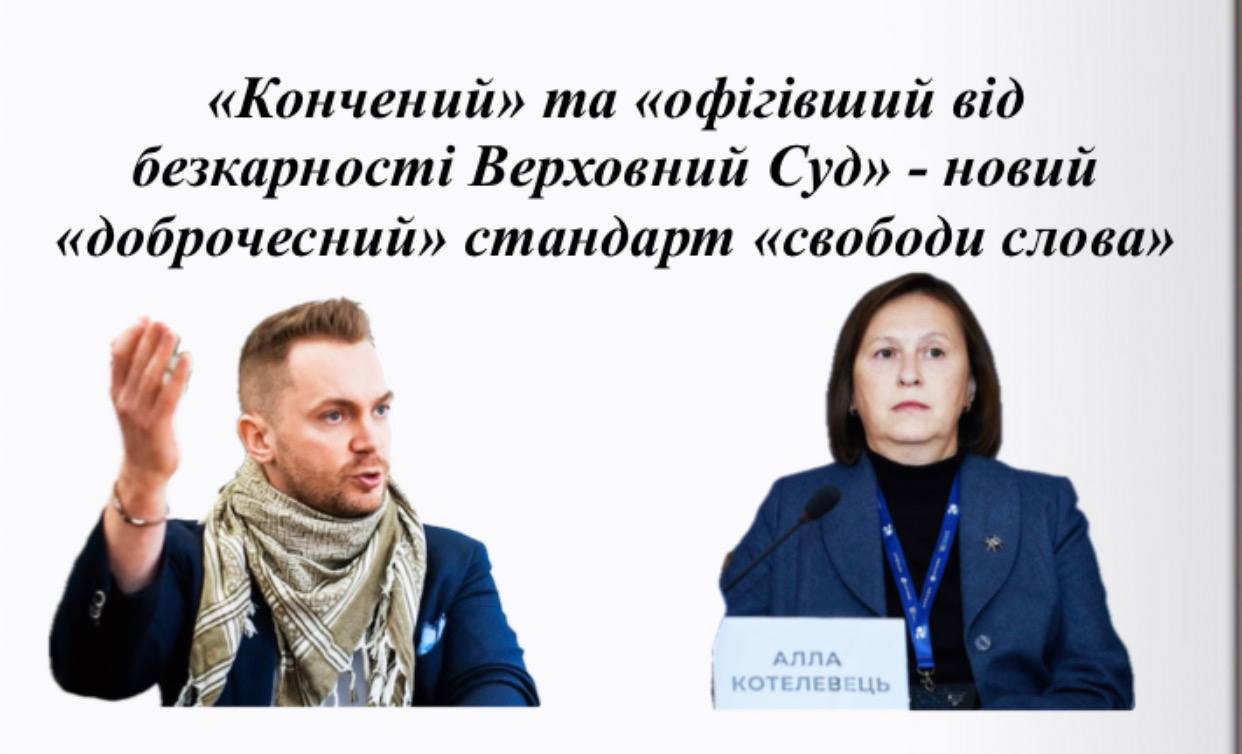
🔥Another disgrace from Avtomaydan’s back office with the official name “High Council of Justice.” ❌4 after months of considering a petition to take measures to protect the authority of the judiciary in the context of the well-known, essentially subversive activity of pseudo-activists such as Zhernakov and Co. in the judicial sphere, the latter issued a conclusion that there are no grounds to take such measures. ❌The author of the conclusion is the questionably known Alla Kotelevets. 👉At the...

Scanned Telegram publication

Читацька громадськість, ознайомившись з протоколом проведення негласних слідчих (розшукових) дій стосовно ексзаступниці керівника Офісу Президента Ірини Мудрої та її коханця Максима Микитася, зацікавилась епізодом з розповіддю про те, як голова Касаційного господарського суду у складі Верховного Суду Лариса Рогач обслуговувала Мудру й Микитася. Як виявилось, Лариса Іванівна регулярно зустрічалася з Мудрою в позасудовій обстановці, брала в неї подарунки на кшталт хусток по 600 доларів і за це вин...

Scanned Telegram publication

“Strike” panel of PAGS: how long until the former HJC member is exposed? ⏳⚖️ Former members of the High Council of Justice and their relatives have been officially added to the staff of the Northern Commercial Court of Appeal. Among the newly minted judges are Mykola Moroz, Yuliia Bokova, and Hanna Ponomarova. While Moroz and Ponomarova are taking a crash course on “how to be a judge” at the National School of Judges and preparing to take the oath, people in the wings are already whispering: th...

Scanned Telegram publication

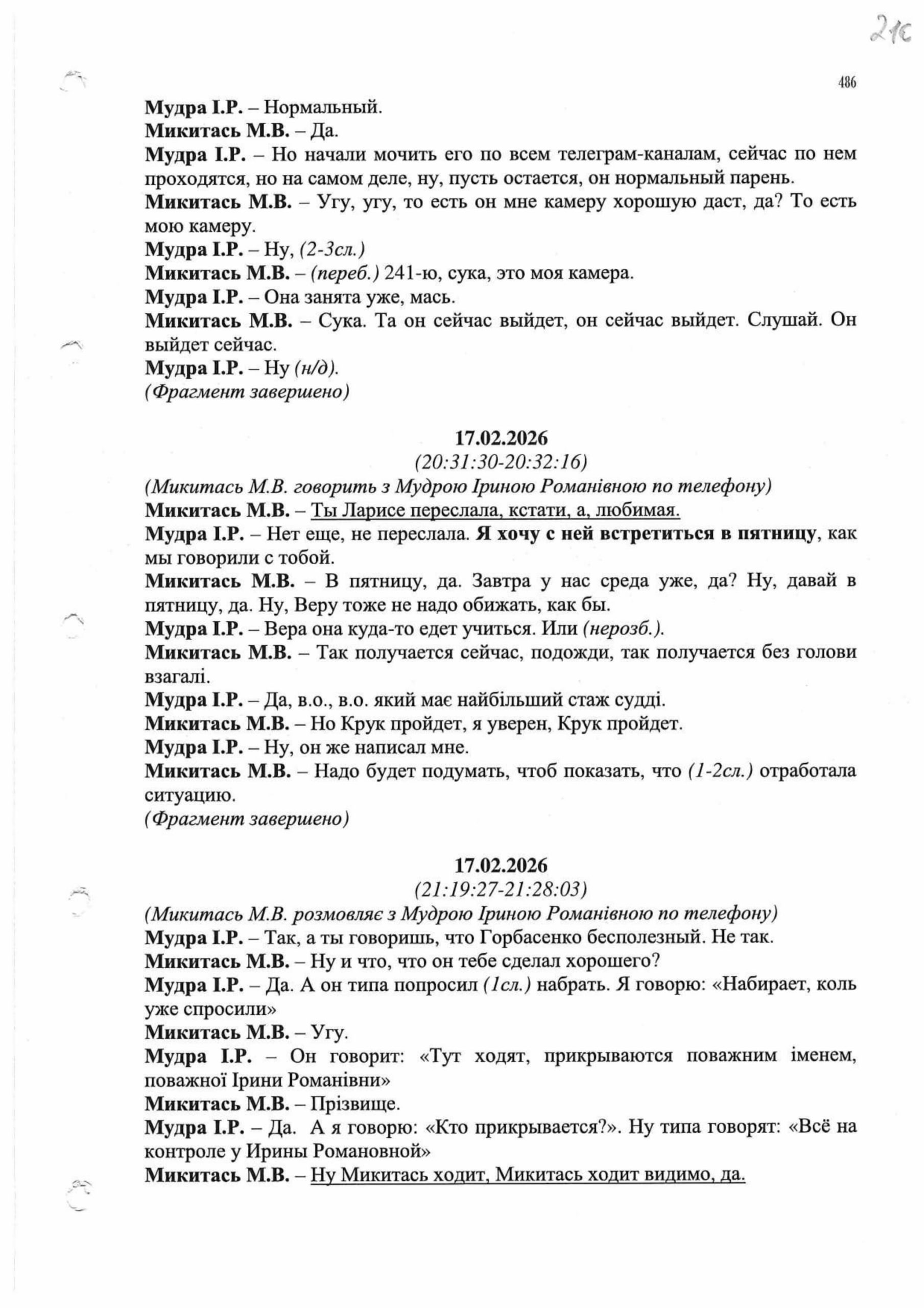
Продовжую публікувати уривки з 5-томного «Клопотання про застосування запобіжного заходу по кримінальному провадженню №52026000000000092 від 18.02.2026». Це – знаменита справа, у якій в слідчий ізолятор були відправлені ексзаступниця керівника Офісу Президента України Ірина Мудра та її коханець Максим Микитась. Фігуранти сьогоднішніх протоколів – це голова Касаційного господарського суду у складі Верховного Суду Лариса Рогач, суддя Вищого антикорупційного суду й ексголова ВАКС Віра Михайленко, с...