Back
Original version

Last week, candidates for the district administrative courts and judges who expressed a desire to be transferred through...

Automatically translated version. May contain inaccuracies compared to the original.

Last week, candidates for the district administrative courts and judges who expressed a desire to be transferred through the competition chose their future courts.

Let's recall the numbers.

The vacant positions in first-instance administrative courts for which the High Council of Justice conducted this competition were 272.

268 people applied to the High Council of Justice to participate in this competition.

263 people passed the admission stage.

242 people chose positions in the courts, 15 of whom are judges.

Also recall that within the selection, candidates took a qualification exam. Key figures of the exam:

- 3428 people submitted documents to the selection with an administrative specialization;

- 3051 person was admitted to testing on the history of Ukrainian statehood;

- 2632 people were admitted to testing of general legal knowledge and knowledge in administrative specialization;

- 604 people were admitted to testing of cognitive abilities;

- 400 people were admitted to the practical task;

- 282 people successfully passed the entire qualification exam.

But only 242 vacancies in the courts have currently been filled by potential judges.

Also recall that interviews on integrity are still ahead. That means not all of these 242 vacancies will actually be obtained by judges. At least 10-15% of candidates will not pass the integrity interviews.

Thus 3428 people submitted documents to participate in the selection, but the existing vacant positions will not be filled.

A logical question arises: WHY?

Why did the state spend two years and millions of money, yet did not fill the vacancies, despite the interest in the competition from 3051 candidate admitted to the first exam?

Let's add more numbers.

At the admission stage to the first exam there were approximately 11 candidates per position.

At the second exam — slightly fewer, 10 candidates per position.

At the third exam — slightly more, 2 candidates per position.

At the practical task — one and a half candidates per position.

After the practical assessment — one candidate per position.

At the admission to the competition itself — less than one candidate per position.

Courts selected 0,85 candidate per position.

So why did this happen?

The answer is obvious:

The High Council of Justice, which at the second exam thoughtlessly threw out candidates by establishing draconian requirements to have 38-39 points in 40 (while the law required only 32), first of all, failed to fill the existing vacancies in the district administrative courts.

Secondly, it left the country without a reserve of candidates for the administrative courts.

Serhii Chumak, commenting on this situation on Facebook, complained that a total of 30 vacancies remained unfilled across five regions.

But one should complain only about oneself.

Who made the decision to throw out after the second exam 1360 candidates who, according to the law, had successfully passed it? The High Council of Justice!

And there were certainly those among them who could have filled these 30 vacancies.

And now what to do? Spend millions of taxpayers' money again on another selection?

I would like to write something else, but from the High Council of Justice's side this is an EPIC FAIL.

Screenshot of a Telegram post: Chumak Serhii Yuriiovych — Last week, candidates for the district administrative courts and j…

Минулого тижня кандидати до окружних адміністративних судів та судді, які виявили намір бути переведеними через конкурс, обирали свої майбутні суди.

Нагадаємо цифри.

Вакантних посад в адміністративних судах першої інстанції, на які ВККС проводила цей конкурс, було 272.

До ВККС для участі в цьому конкурсі звернулося 268 осіб.

Етап допуску пройшли 263 особи.

Посади в судах обрали 242 особи, 15 з яких - судді.

Нагадаємо також, що у межах добору кандидати пройшли кваліфікаційний іспит. Ключові цифри іспиту:

- 3428 осіб подали документи в добір з адміністративної спеціалізації;

- до тестування з історії української державності було допущено 3051 особу;

- до тестування загальних знань у сфері права та знань з адміністративної спеціалізації було допущено 2632 особи;

- до тестування когнітивних здібностей було допущено 604 особи;

- до практичного завдання було допущено 400 осіб;

- весь кваліфікаційний іспит успішно склали 282 особи.

Але лише 242 вакансій в судах наразі отримали потенційних суддів.

Також нагадаємо, що попереду ще співбесіди на доброчесність. Тобто не всі з цих 242 вакансії по факту отримають суддів. Мінімум 10-15% кандидатів не пройдуть співбесіди на доброчесність.

Тобто 3428 осіб подали документи для участі в доборі, але наявні вакантні посади не будуть заповнені.

Виникає логічне питання: ЧОМУ?

Чому держава витратила два роки та мільйони грошей, а вакансії не заповнила, попри інтерес до конкурсу з боку 3051 кандидата, допущеного до першого іспиту?

Додамо ще цифр.

На етапі допуску до першого іспиту було приблизно 11 кандидатів на місце.

На другому іспиті - трохи менше 10 кандидатів на місце.

На третьому іспиті - трохи більше 2 кандидатів на місце.

На практичному завданні - півтора кандидати на місце.

Після перевірки практичного - один кандидат на місце.

На допуску до самого конкурсу - менше одного кандидата на місце.

Суди обрали 0,85 кандидата на місце.

Чому ж так сталося?

Відповідь очевидна:

ВККС, яка у другому іспиті бездумно викинула кандидатів, встановивши драконівські вимоги мати по 38-39 балів з 40 (в той час, як закон вимагав лише 32), по-перше, завалила заповнення наявних вакансій в окружних адміністративних судах.

По-друге, залишила країну без резерву кандидатів в адмінсуди.

Сергій Чумак, коментуючи у ФБ цю ситуацію, поскаржився, що в пʼяти областях сумарно залишилося 30 незаповнених вакансій.

Але ж скаржитися потрібно виключно на себе.

Хто ухвалив рішення викинути після другого іспиту 1360 кандидатів, які відповідно до закону його успішно склали? ВККС!

А там точно були ті, хто би міг заповнити ці 30 вакансій.

А тепер що робити? Витрачати знову мільйони грошей платників податків на ще один добір?

Хотіли би написати щось інше, але з боку ВККС це EPIC FAIL.

Screenshot of a Telegram post: Chumak Serhii Yuriiovych — Минулого тижня кандидати до окружних адміністративних судів та суд…
Download Download proof

Other channel publications

Scanned Telegram publication

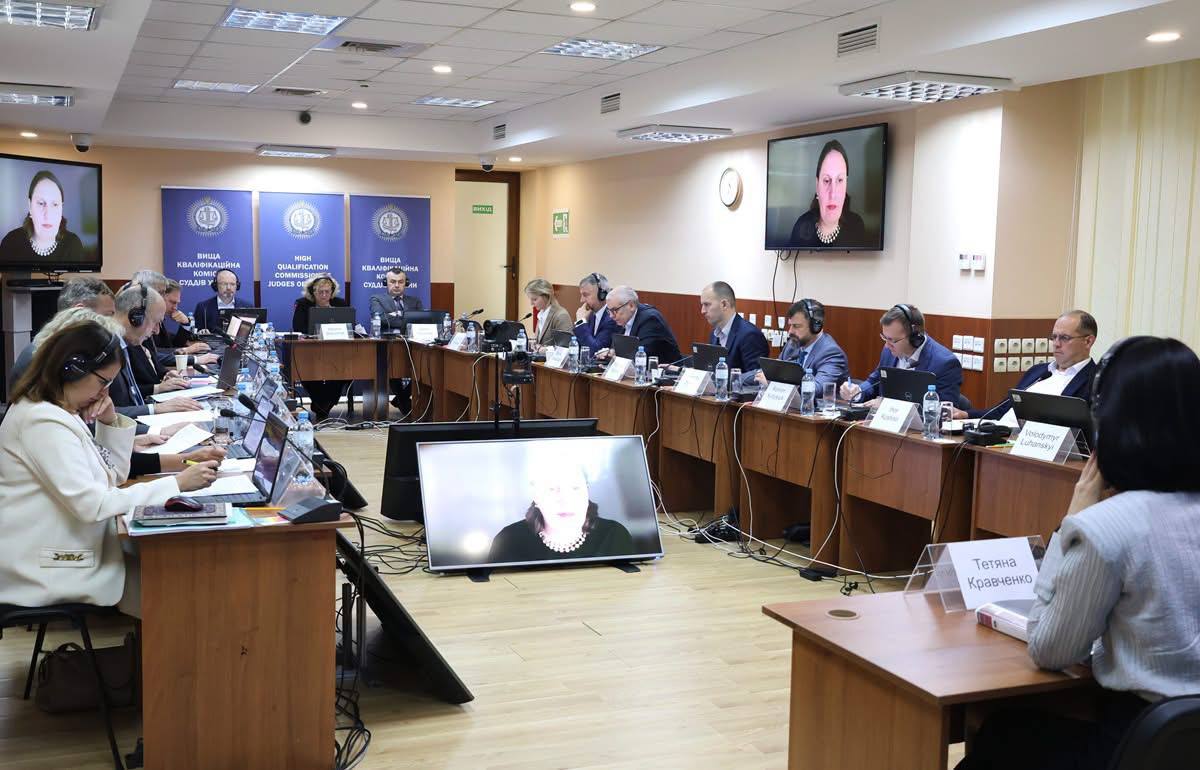
Today the High Qualifications Commission of Judges (HQCJ) and the Expert Council were deciding on candidates for the Specialized Administrative Court of Appeal. Reminder: 10 judicial vacancies have been identified in this court. To begin work, at least half need to be appointed. 23 candidates reached the stage of joint interviews. 21 candidates appeared for the interview itself. Before that, the Expert Council determined that 19 out of 23 were not of integrity. For the rest, the votes of the Exp...

Scanned Telegram publication

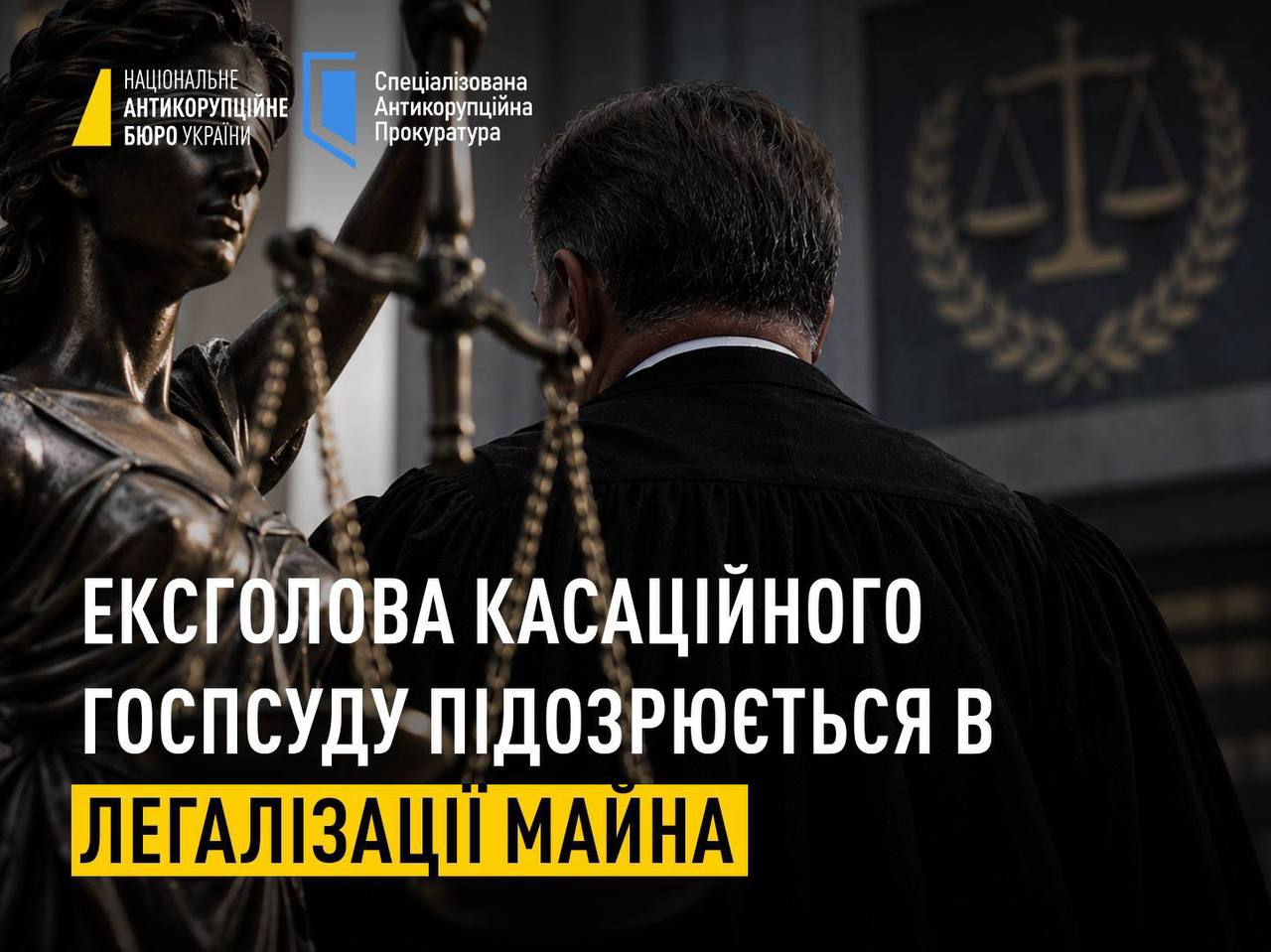
Legalization of property worth 26 million UAH: former head of the Commercial Cassation Court Bohdan Lviv has been notified of suspicion. The NABU and SAP have notified former head of the CC of the Supreme Court Bohdan Lviv of suspicion in legalizing (laundering) property obtained by criminal means, in an especially large amount. In addition, two other persons have been notified of suspicion in committing the crime — the judge’s former subordinate and her mother. During the period 2021–2022 years...

Scanned Telegram publication

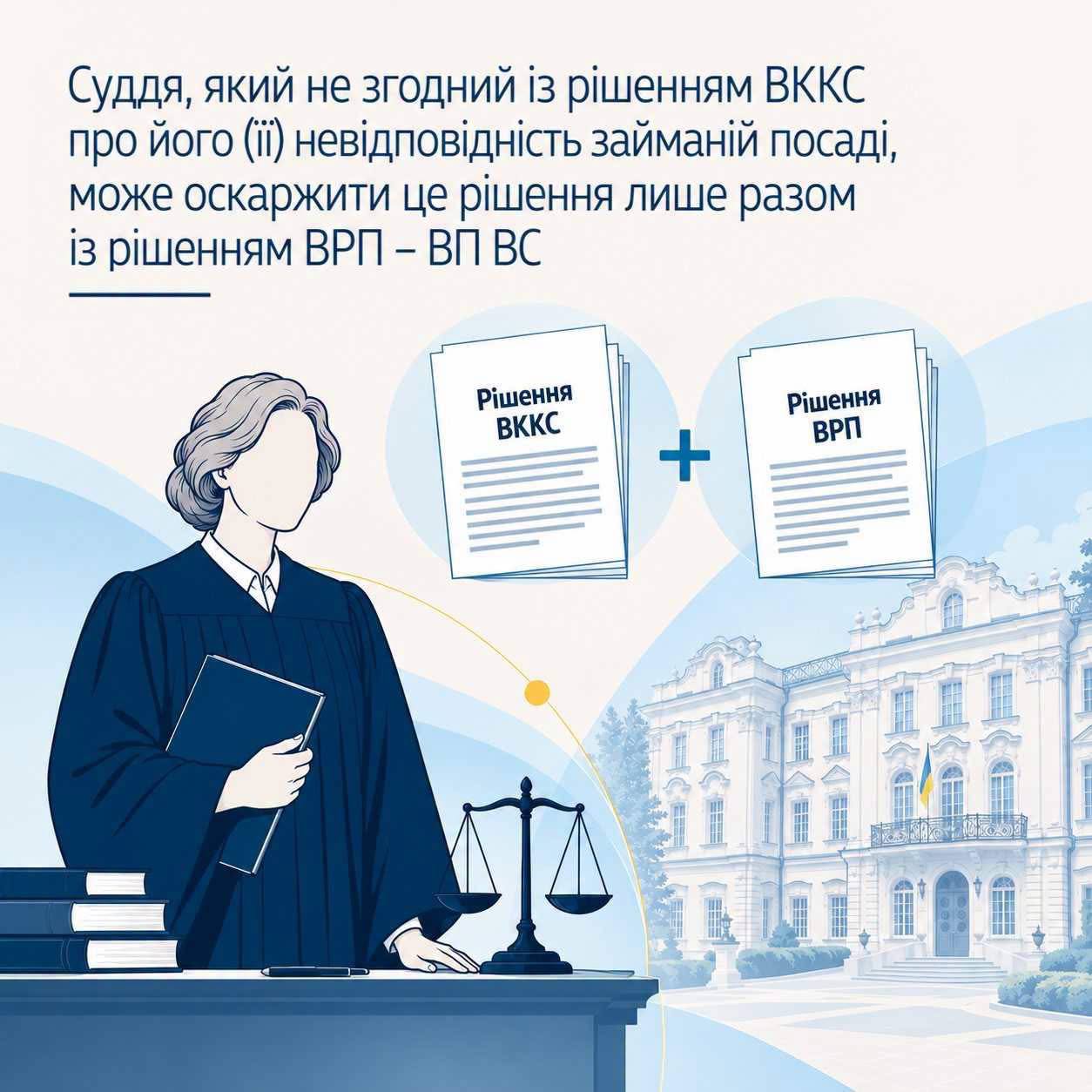
The Grand Chamber of the Supreme Court issued an important decision regarding the qualification assessment of judges for fitness to hold their position. By this decision, the GC SC determined at which stage a judge may challenge the High Qualification Commission of Judges’ decision finding them unfit for their position. When the HQCJ adopts a negative decision based on a judge’s assessment as to fitness for their position, it submits a proposal to the High Council of Justice for the judge’s dism...

Scanned Telegram publication

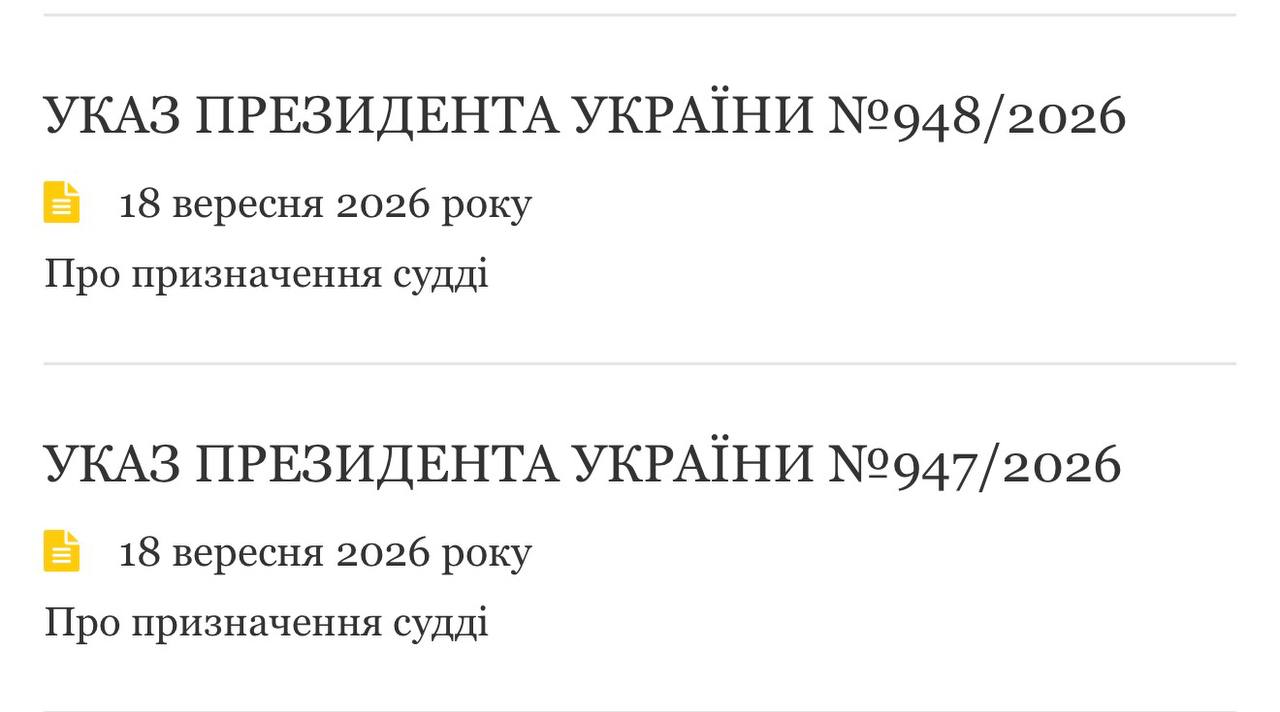
The Office of the President published two decrees appointing judges. Earlier last week four more were published. It appears that judges are being appointed according to two criteria: 1. “Lost” decrees from 1-7 years are located, signed, and published. 2. New submissions from the HCJ are processed as quickly as possible, decrees are signed, and also published. This indicates a change in the Office of the President’s policy on judicial appointments after the Mudra-Mykitas recordings exposed storie...

Scanned Telegram publication

The Plenum of the Supreme Court, which last Friday attempted to decide on the necessity of holding a new competition for the SC, failed to reach a decisive vote on that issue. The votes of the Supreme Court judges split almost in half. Later it turned out that the counting commission also does not know how to add up in a column. Therefore the voting results were annulled, and the issue of announcing the competition will be considered at the next plenum. Recall that the SC already has more than 5...

Scanned Telegram publication

The President has appointed more 15 judges. The Office of the President released today Decrees dated 15 September 2026, numbers 911-914 and 920/2026–930/2026. Unlike the previous two rounds, when judges were appointed mostly to a single appellate court, yesterday’s appointments can be called a “mixed bag.” There are first-instance judges whose decrees had been “lost” for several years, appellate judges who received recommendations for appointment 3-6 months ago, and even a couple of judges whose...